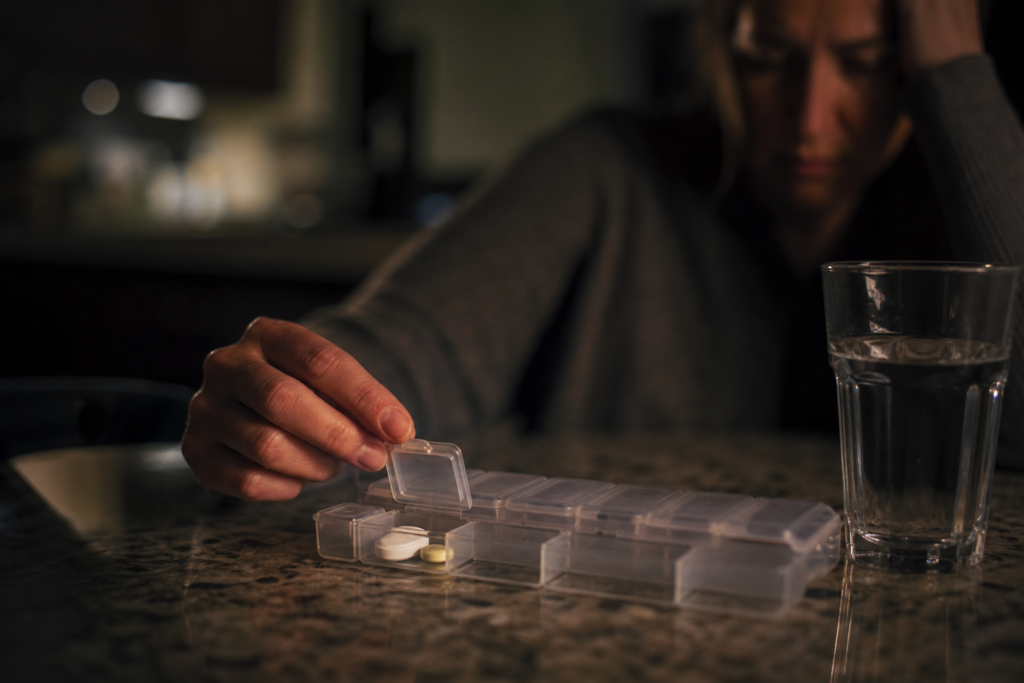
Bipolar depression can leave you exhausted, slowed down, hopeless, or unable to feel pleasure even when you are taking medication as prescribed. When meds for bipolar depression do not seem to help, it does not automatically mean you have failed treatment or that nothing will work. It usually means the prescribing plan needs a careful review.
A commonly missed issue is alcohol or drug use. Substances can worsen low mood, disrupt sleep, interfere with medicines, and make it harder to tell whether a medication is helping. Treatment for substance use and bipolar symptoms may need to happen together rather than as separate problems.
The symptom
The symptom is not always “still depressed.” Medication may be falling short if you notice:
- Low mood, guilt, emptiness, or loss of interest continuing without meaningful relief
- Sleeping far more or far less than usual
- Changes in appetite, energy, concentration, movement, or ability to manage daily tasks
- Anxiety, agitation, or irritability alongside depression
- Mood shifts that feel faster, more intense, or less predictable
- Side effects that make it hard to take medication consistently
- Alcohol, cannabis, stimulants, sedatives, or other drugs becoming a way to cope
Urgent help is needed if you are thinking about suicide, self-harm, or harming someone else; feel unable to stay safe; have become severely confused or agitated; or are sleeping very little while feeling unusually energized, impulsive, or out of control. Contact emergency services, go to emergency care, or reach out to a crisis service in your area. Do not wait for a routine medication appointment.
Causes, most likely first: why meds for bipolar depression can fall short
- The medication has not had an adequate trial.
Some treatments take time before benefits are noticeable, and the dose may need gradual adjustment. Stopping early because relief is not immediate can make it impossible to know whether the medication could have helped.
- Doses are missed, changed, or stopped because of side effects or uncertainty.
This is extremely common and understandable. A person may skip doses after feeling better, take less to reduce side effects, run out of medication, or stop because they fear dependence. Abrupt changes can trigger withdrawal effects, return of depression, or mood instability.
- The treatment does not match the current mood pattern.
Bipolar depression is not the same as depression without a history of mania or hypomania. Some medicines used for depression can be unhelpful or may destabilize mood for certain people if they are not paired with an appropriate mood-stabilizing plan. The diagnosis, past episodes, family history, and reaction to previous treatments all matter.
- Alcohol or other drug use is muddying the picture.
Alcohol can deepen depression and impair sleep. Stimulants can produce crashes, agitation, or mood elevation. Sedatives and opioids can worsen low energy and emotional numbness. Cannabis can affect motivation, anxiety, sleep, and perception. Mixing substances with prescribed psychiatric medication can also create safety risks.
- Sleep, stress, and routine are working against recovery.
Irregular sleep, shift changes, major conflict, isolation, missed meals, and sustained stress can all intensify bipolar symptoms. Medication is important, but it cannot fully offset a pattern that repeatedly destabilizes mood.
- Another health issue, medication, or interaction is contributing.
Physical conditions, hormonal changes, pain, and nonpsychiatric medicines can affect energy, sleep, concentration, and mood. So can interactions among prescriptions, over-the-counter products, supplements, and substances.
- The care plan is medication-only when more support is needed.
Psychotherapy, practical structure, peer support, family education, and treatment for addiction can be essential parts of recovery. Persistent symptoms may signal a need for more support, not merely a different prescription.
What is the best drug for bipolar depression?
There is no single best medication for every person. The right choice depends on your symptoms, prior episodes of mania or hypomania, medical history, other medications, side effects, substance use, pregnancy considerations where relevant, and what has or has not worked before.
A prescriber may consider mood stabilizers, certain antipsychotic medications, or other carefully selected approaches. Antidepressants require particular caution in bipolar disorder because they may not be appropriate for everyone. Do not add, stop, or switch a medication on your own.
What are treatment options for bipolar depression and anxiety?
Anxiety can be part of bipolar depression, a separate condition, a medication side effect, a response to substance use, or a warning sign of a mood shift. Treating anxiety starts with identifying which of these is happening.
Useful options may include medication review, therapy that builds coping and relapse-prevention skills, regular sleep, reducing stimulants and alcohol, and integrated treatment for substance use. A clinician should guide medication decisions, especially when anxiety is accompanied by racing thoughts, agitation, reduced sleep, or impulsive behavior.
How to fix each one
If the trial may be too short or the dose may be off
Book a medication review and bring a simple record of mood, sleep, side effects, missed doses, substance use, and major stressors. Describe changes plainly: “I am sleeping most of the day,” “I feel restless,” or “I am still unable to work.” This gives the prescriber usable information.
Ask what improvement should look like, what side effects warrant a call, and when the plan should be reassessed. Do not increase or decrease medication without guidance.
If taking medication consistently is difficult
Say so directly. Your prescriber cannot fix a problem they do not know about. Side effects, cost barriers, shame, fear, forgetfulness, and a chaotic schedule are treatment barriers, not moral failures.
Use a routine tied to something you already do, such as a regular meal or bedtime ritual. A pill organizer, reminder, refill plan, or help from a trusted support person may reduce missed doses. If a side effect is driving nonadherence, ask about alternatives rather than quietly discontinuing the medication.
If your diagnosis or mood pattern needs review
Tell your clinician about any past periods of unusually high energy, reduced need for sleep, racing thoughts, risky decisions, increased talkativeness, anger, or feeling invincible. Mention whether depression worsened after starting an antidepressant.
A thorough reassessment can lead to a safer, more targeted plan. It may also clarify whether anxiety, trauma, attention problems, or substance use are overlapping with bipolar symptoms.
If alcohol or drugs are involved
Be honest about what you use, how often, and what happens before and after use. This information helps prevent dangerous interactions and makes treatment more accurate.
If stopping alcohol, sedatives, opioids, or other substances could lead to withdrawal, seek medical advice before attempting it alone. Withdrawal can be dangerous. Addiction treatment can provide assessment, medical support where needed, therapy, recovery planning, and coordination with mental health prescribers.
Integrated care matters: a program should know about your bipolar diagnosis, current prescriptions, past mood episodes, and safety concerns. If you are considering residential, outpatient, or detox treatment, ask how the program manages psychiatric medications and communicates with your prescriber.
If routine and stress are destabilizing you
Protect sleep as a clinical priority, not a luxury. Keep wake and sleep times as consistent as practical. Limit alcohol and recreational drugs, particularly when sleep or mood has begun to change. Build predictable meals, movement, appointments, and wind-down time into the week.
Therapy can help you identify early warning signs, manage relationship stress, and create a plan for difficult days. Family or trusted friends may be able to help notice changes you cannot easily see yourself.
If another health factor may be involved
Bring a complete list of prescriptions, supplements, over-the-counter products, and substances to your appointment. Tell the clinician about new physical symptoms, pain, recent illness, or changes in other medical treatment. Do not assume a mood change is purely psychological.
How to prevent it next time
What is a good daily routine for someone with bipolar disorder?
The most useful routine is one that is repeatable, not perfect. Aim for regular sleep and wake times, reliable medication timing, meals, hydration, movement, and planned contact with supportive people. Avoid using alcohol or drugs as a sleep aid or emotional escape; both can turn a difficult day into a more serious mood episode.
Keep a brief mood record that includes sleep, medication adherence, side effects, stress, and substance use. The goal is to spot patterns early, before symptoms become a crisis.
Make a written response plan
Write down your early signs of depression and mood elevation, the people to contact, your prescriber’s contact details, and the steps that help you stay safe. Include a plan for what to do if you begin missing medication or using substances more often.
Share the plan with someone you trust if that feels safe. They may notice isolation, disrupted sleep, impulsive choices, or increasing substance use before you recognize the pattern yourself.
Keep treatment connected
Medication follow-up, therapy, and addiction support work better when providers know what the others are doing. Tell each provider about changes in your medication, mood, sleep, and substance use. If you enter drug or alcohol treatment, ask for coordinated follow-up after discharge so mental health care does not lapse during a vulnerable transition.
The practical next step is a prompt appointment with the clinician who prescribes your medication, with an honest account of symptoms, side effects, missed doses, sleep, and any alcohol or drug use. A plan can be changed safely; stopping treatment alone can make a hard situation more dangerous.