Seasonal changes can affect mood, sleep, energy and cravings. Sad light therapy can be a practical part of a wider plan for people whose depression follows a seasonal pattern, but the lamp itself is only useful if it is bright enough, comfortable to use consistently and appropriate for your health history.
The overlooked issue is fit with recovery. A disruptive sleep schedule, untreated depression or a change in mood that feels unusually activated can make substance use harder to manage. Light treatment may support a routine, but it does not replace assessment, therapy, medication when indicated, or alcohol and drug treatment.
How we compared them: sad light therapy
The options below are ranked as lamp formats rather than individual brands. Model features change frequently, while the practical questions stay the same: does the device deliver therapeutic-strength light at a usable distance, can it fit into an ordinary morning, and does it make safe use straightforward?
A suitable treatment lamp should clearly state that it provides 10,000 lux at a specified distance. Lux describes the light reaching your eyes, so a claim without a distance is less helpful. A large panel may deliver strong light farther away; a small device may require a closer position that is awkward at a desk or breakfast table.
What mattered most
- Clear therapeutic specification: A stated 10,000-lux output and instructions explaining where to place the lamp.
- Usable light surface: A wider panel is generally easier to use because small shifts in posture are less likely to take you out of the effective light area.
- Comfort in real routines: Glare, flicker, heat, a fragile stand and inconvenient controls all reduce the chance of regular use.
- Adjustability: An angle-adjustable lamp can direct light toward the eyes without requiring you to stare into it.
- Safety information: Strong instructions, a return policy and accessible customer support matter more than decorative features.
How to use a light box for SAD
Use the device according to its manual, usually early in the day and at the stated distance. Keep your eyes open, but do not look directly into the light. You can read, eat breakfast or work nearby if your face remains within the recommended position.
Starting early matters because late-day bright light can interfere with sleep for some people. If insomnia, agitation, headaches, eye discomfort or a worsening mood develops, stop and speak with a clinician.
Does SAD light therapy work?
Light treatment is commonly used for seasonal affective disorder, sometimes called winter depression. It aims to compensate for the reduction in bright morning light that can affect circadian rhythm and mood during darker seasons.
It is not equally effective for everyone, and it is not a diagnosis tool. Persistent low mood, loss of interest, hopelessness, severe anxiety, or using alcohol or drugs to cope deserves professional support whether symptoms are seasonal or not.
Who should check with a clinician first
Seek individual medical advice before starting if you have an eye condition, take medicines that increase sensitivity to light, or have a history of mania, hypomania or bipolar disorder. Bright-light exposure can affect mood and sleep, so it needs particular care where mood elevation has occurred.
If depression brings thoughts of self-harm, inability to stay safe, or a return to heavy substance use, seek urgent local crisis or medical help rather than trying to manage the situation with a lamp.
The ranking
| Rank | Option | Best fit | Why it ranks here | Main limitation |
|---|---|---|---|---|
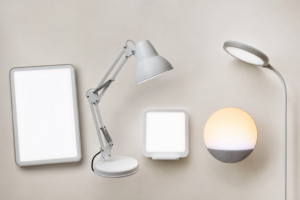
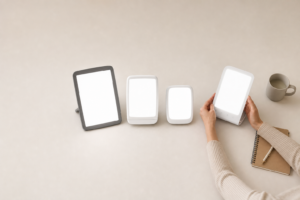
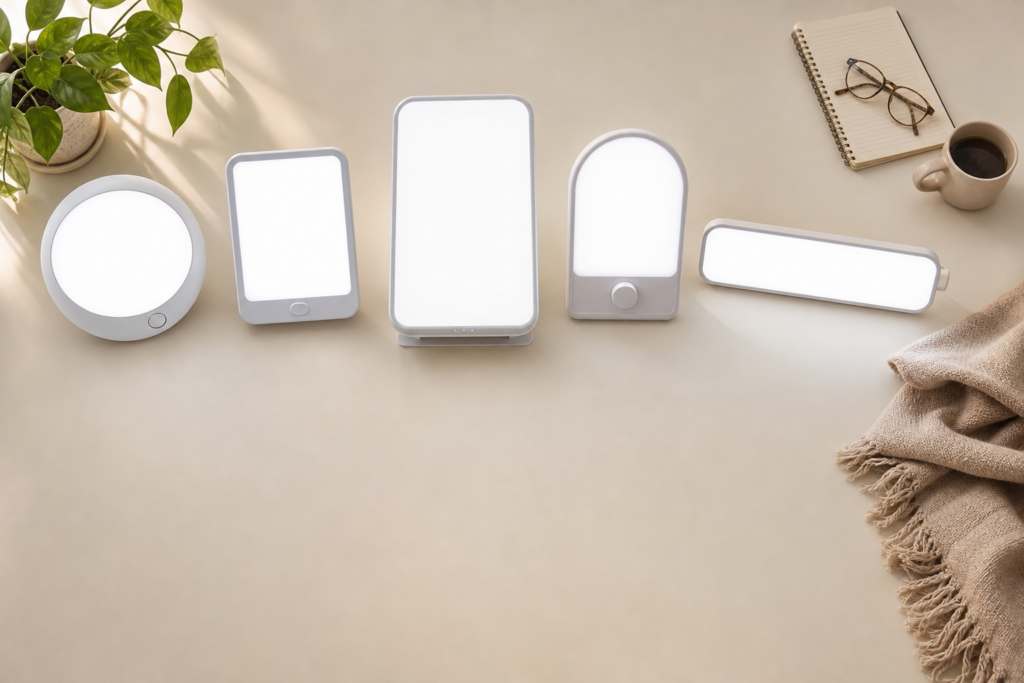
| Top choice | Broad-panel 10,000-lux light box | Most people treating seasonal symptoms at home | A generous light area and clear positioning make consistent use easier | Takes up desk or table space |
| Strong alternative | Medium adjustable desk lamp | People with a regular desk or breakfast routine | Balances footprint, positioning and practical daily use | Effective distance may be closer than with a large panel |
| Good for small spaces | Vertical light panel with stable stand | Shared homes and narrow work surfaces | Upright design can fit beside a monitor or on a counter | Narrower beam may require more careful positioning |
| Best for travel | Compact portable light box | People away from home who already know light therapy suits them | Easier to pack and continue a routine | Often demands close, deliberate use |
| Limited role | Dawn simulator | People mainly struggling to wake in dark mornings | May make waking feel more gradual and support a morning routine | It is not a direct substitute for a therapeutic light box |
| Usually skip for treatment | Wearable light device | People drawn to hands-free claims | Can seem convenient | Positioning, comfort and therapeutic output are harder to judge |
Top choice: broad-panel 10,000-lux light box
A broad-panel light box is the most forgiving option. Its larger illuminated area makes it easier to sit naturally while eating, reading or beginning work. That matters because treatment is more likely to become a habit when it does not require holding a precise pose.
Look for a stable base, adjustable tilt and a manual that specifies both lux and distance. A device that merely looks bright, or that advertises coloured ambience lighting, is not necessarily designed for seasonal depression treatment.
This format is a sensible first purchase for someone who has discussed seasonal symptoms with a clinician and wants a dedicated, home-based tool.
Strong alternative: medium adjustable desk lamp
A medium desk-style box works well when your mornings already happen in one place. The best versions allow you to angle the panel slightly downward toward your face while you look at something else.
Check whether the stated treatment distance fits your desk layout. If you must sit uncomfortably close or rearrange your workspace every day, a bigger panel will be easier to maintain over time.
Good for small spaces: vertical light panel
Vertical panels suit people who have little horizontal space but can leave a lamp standing beside a laptop, chair or kitchen workspace. They can be less intrusive than a wide box and still provide useful coverage when positioned correctly.
The trade-off is that they may have a narrower effective zone. Read the placement guidance carefully and make sure the lamp will sit at a height that directs light toward your face rather than your chest or ceiling.
Best for travel: compact portable light box
A portable lamp is useful when travel would otherwise interrupt a routine. It is best thought of as a continuation tool, not necessarily the easiest starting point. Smaller panels commonly require a more exact distance and may offer less flexibility when you move around.
Choose this format only if you can realistically use it where you travel. A lamp that remains in a bag does not help, and late use in an unfamiliar place may make sleep more difficult.
Limited role: dawn simulator
A dawn simulator gradually brightens a bedroom around waking time. This can be appealing when getting out of bed is the central struggle, particularly during darker months. It may also help establish a more predictable morning ritual.
However, it should not be assumed to provide the same treatment as a properly specified light box. If seasonal depression is affecting daily functioning, choose a therapeutic lamp or discuss other care with a clinician rather than relying on a wake-up light alone.
Usually skip for treatment: wearable light device
Wearable devices promise hands-free use, but convenience does not settle the questions that matter: how much light reaches the eyes, whether the angle is appropriate and whether the experience is comfortable enough to repeat.
For a first attempt at light treatment, a stationary lamp with clear instructions is the more transparent choice. It also makes it easier to notice how timing affects mood and sleep.
Which one to choose
Choose a broad-panel light box if you want the simplest, most flexible option and have a stable place to use it every morning. It is the strongest starting point for most people because it reduces the need for exact positioning.
Choose a medium adjustable lamp if you have a dependable desk or breakfast routine and need something less bulky. Choose a vertical panel if horizontal space is the main problem. A compact lamp makes sense for frequent travel only when you are prepared to follow its placement instructions carefully.
Choose a dawn simulator as an add-on for difficult mornings, not as your sole response to significant depression. Avoid making a wearable device your first purchase when its output and instructions are unclear.
What is winter depression?
Winter depression is a common informal term for seasonal affective disorder with a pattern of symptoms during darker months. It can involve low mood, low energy, sleeping more, changes in appetite, difficulty concentrating and withdrawing from usual activities.
The same symptoms can occur with nonseasonal depression, grief, anxiety, physical illness or substance-related problems. A recurring calendar pattern can be a useful clue, but it is not enough to diagnose yourself.
Is there a connection between seasonal affective disorder and vitamin D?
Seasonal affective disorder and vitamin D are often discussed together because both can relate to less sunlight exposure. They are not interchangeable explanations for depression. A vitamin D supplement does not replace assessment for mood symptoms, and a light box does not replace medical advice about a possible deficiency.
Ask a healthcare professional about testing or supplementation if that is appropriate for you. Avoid treating either approach as a reason to delay help for depression or substance use.
How to treat seasonal affective disorder
A treatment plan may include bright-light therapy, talking therapy, medication, regular sleep and wake times, physical activity, social support and changes to alcohol or drug use. The appropriate combination depends on your symptoms, health history and previous response to treatment.
For someone in recovery, keep the plan simple and observable: use the lamp at a consistent morning time, protect sleep, tell a trusted person if mood changes, and bring new symptoms to a clinician or treatment provider. If drinking or drug use is becoming a way to get through darker days, reaching out early can prevent a deeper setback.
What are the symptoms of seasonal affective disorder in the summer?
Some people experience a seasonal pattern in warmer, brighter months rather than winter. Symptoms may include low mood alongside poor sleep, restlessness, anxiety, irritability, appetite changes or feeling overwhelmed by heat and long daylight.
A bright-light lamp is not an automatic answer for this pattern and could worsen sleep or activation. Speak with a clinician to clarify what is driving the change before using light treatment.
A lamp is worth considering when symptoms are seasonal, morning use is realistic, and you can select a clearly specified 10,000-lux device. Professional support is the better next step when depression is severe, the pattern is unclear, mood becomes activated, or alcohol and drugs are increasingly part of how you cope.