Seasonal depression can make ordinary routines feel much harder, and choosing a light for SAD treatment should not come down to the brightest-looking lamp or the most persuasive marketing. The important questions are whether the device is designed for bright-light therapy, whether you can use it comfortably and consistently, and whether light therapy is appropriate alongside your mental health or substance-use care.
A point often missed in product comparisons: timing and safety can matter as much as the device. A suitable light box used at the wrong time, or used without clinical advice when sleep is unstable or mood is elevated, may not be the right approach.
How we compared them: light for SAD treatment
The options below are established light-box models, not ordinary desk lamps, red-light devices, or decorative “sun lamps.” They are ranked as decision tools rather than as a claim of independent laboratory testing. A lamp only helps if it is a safe fit for the person who will actually use it.
What makes a SAD therapy light worth considering?
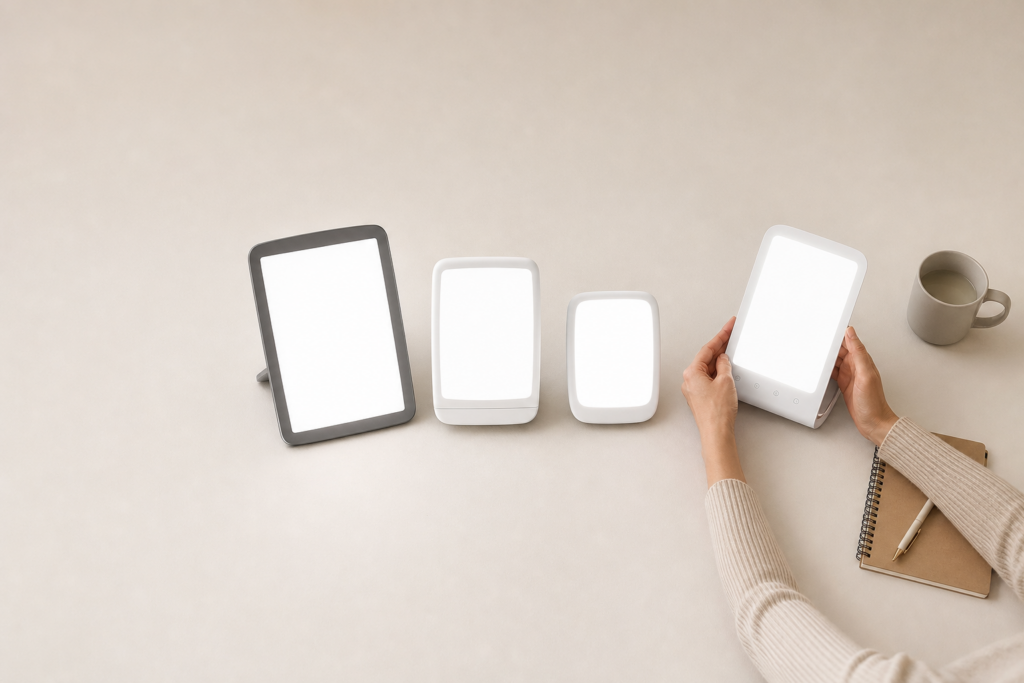
A practical light box should be made for bright-light therapy and have clear instructions for placement, timing, and use. It should provide a comfortable illuminated area rather than requiring you to stare directly into a small, harsh source.
We gave the most weight to:
- A design intended specifically for light therapy rather than general room lighting.
- A usable light surface that can fit into a morning routine, such as reading, breakfast, work, or quiet recovery planning.
- Positioning flexibility, because glare and awkward placement can make a device sit unused.
- Straightforward controls and a stable design.
- Availability of manufacturer guidance and a model history familiar to specialist seasonal-depression services.
Portability matters, but it is not automatically better. A smaller unit may suit travel or a crowded home; a larger unit can be easier to use without repeatedly adjusting your body or the lamp.
Do SAD therapy lights really work?
Bright-light therapy can help some people with seasonal affective disorder, particularly when reduced daylight is linked with recurring low mood, low energy, oversleeping, appetite changes, or difficulty functioning. It is not an instant mood lift and it does not replace an assessment when depression is significant.
Response differs. Some people notice improvement after establishing a consistent routine; others need psychotherapy, medication, changes to sleep and daily activity, or a combination of treatments. If symptoms interfere with work, relationships, recovery, or basic self-care, speak with a qualified clinician rather than relying on a lamp alone.
For someone entering alcohol or drug treatment, depression and disrupted sleep can also be connected to withdrawal, early recovery, trauma, anxiety, or another mental health condition. A treatment team can help distinguish seasonal symptoms from these overlapping concerns and build light exposure into a broader care plan.
Safety before convenience
Get clinical advice before starting if you have an eye condition, take medication that increases sensitivity to light, have a history of bipolar disorder or periods of unusually elevated mood, or have major sleep disruption. Bright light can sometimes trigger agitation, headaches, eye discomfort, or a shift toward an overly activated mood.
Stop and seek advice if you develop troubling side effects, worsening insomnia, marked irritability, racing thoughts, or changes that feel unlike your usual self. Urgent mental health support is needed for thoughts of self-harm, inability to stay safe, severe confusion, or psychosis.
The ranking
| Ranking | Option | Best fit | Why it ranks here | Main trade-off |
|---|---|---|---|---|
| First | Day-Light Classic | A reliable home routine | Large-format style supports comfortable daily use and is a well-known option in seasonal-depression guidance | Takes more dedicated space |
| Second | NorthStar | People who want a focused treatment setup | Purpose-built design and established presence in specialist recommendations | May feel less convenient in a small living area |
| Third | SunRay II | A desk-based routine | A practical choice for sitting activities where a stable placement is possible | Works best when you can keep a regular setup |
| Fourth | BOXelite | Users prioritising a broad, bright-light surface | Larger-format approach can reduce the temptation to lean toward a small light source | Less suited to travel or limited storage |
| Fifth | Day-Light Sky | Smaller homes and multipurpose spaces | Compact format may be easier to keep visible and use regularly | A smaller surface can require more careful positioning |
| Sixth | SunTouch Plus | Simple personal use | Straightforward option for someone who wants a dedicated device without a large footprint | Less forgiving if your seating position changes often |
| Seventh | BuddyLux | Portability and occasional travel | Small and easy to move between locations | Not the strongest choice when a fixed, comfortable home routine is possible |
First: Day-Light Classic — best overall for a consistent home routine
The Day-Light Classic is the strongest all-round choice when you have room to make light therapy part of a dependable morning ritual. Its larger-format style is useful because the goal is usually to sit near the light while doing an ordinary activity, not to hold a device close or stare at it.
Choose it if your main barrier is consistency. Place it where you already spend time early in the day, then follow its instructions for distance, angle, and session timing. A lamp stored in a cupboard is rarely as helpful as one that has a clear place in your routine.
It is less suitable if you need to pack it away constantly, travel often, or have no stable surface for it.
Second: NorthStar — best for a dedicated treatment space
NorthStar is a sensible choice for someone who can create a regular light-therapy spot. It suits the person who prefers to separate treatment from general household lighting and wants the ritual to feel deliberate.
This can be especially helpful in recovery: a planned morning activity can add structure at a time when sleep, cravings, mood, and motivation may be unpredictable. The light should be one support among many, not a substitute for counselling, peer support, prescribed treatment, meals, movement, or sleep care.
Third: SunRay II — best for desk use
SunRay II fits a person who can use a lamp while seated at a desk or table. It is a practical option if your morning already includes journaling, scheduling appointments, remote work, or reading.
The key is not to turn a therapy session into a test of endurance. If the placement causes glare or makes you avoid your usual task, reconsider the setup or choose a broader-format option.
Fourth: BOXelite — best for people who dislike narrow light sources
BOXelite is a worthwhile alternative for those who want a larger illuminated area. A broader light source can feel easier to live with during quiet morning activities, particularly when small lamps feel visually intense or overly fussy.
Its drawback is practical rather than clinical: larger equipment needs a stable home. Before choosing it, identify the actual surface where it will live and whether you can use it without disrupting others in the household.
Fifth: Day-Light Sky — best for limited space
Day-Light Sky is the better match when available space is the decisive factor. A compact device may be easier to leave on a kitchen counter, bedside table, or work surface, which can improve follow-through.
Compact does not mean casual. Follow the product’s guidance closely and avoid assuming that any nearby glow has the same therapeutic effect. Correct positioning remains important.
Sixth: SunTouch Plus — best for a simple personal routine
SunTouch Plus may suit someone who wants a dedicated light box without committing a large area of their home to it. It is most useful for a person with a predictable chair, table, and morning window.
If your schedule changes frequently, you share living space, or you tend to move around while getting ready, a model with a more forgiving light surface may be the better investment.
Seventh: BuddyLux — best for portability, not as a default choice
BuddyLux earns a place for people who need a portable option. It may be useful when living arrangements change, when travelling, or when treatment is split between more than one location.
For most people, portability should be secondary to a setup that is comfortable enough to repeat. If you have the space, a larger dedicated unit is generally the more practical starting point.
What light is used to treat SAD?
The relevant option is a bright-light therapy box designed for seasonal affective disorder. Look for a product that clearly states its intended therapeutic use and gives detailed safety and placement instructions.
Do not substitute an ordinary lamp, a tanning device, or a red-light product. Marketing terms such as “full spectrum” are not, by themselves, proof that a device is appropriate for seasonal depression. A therapy light should also be designed to limit ultraviolet exposure.
Does LED light therapy work for SAD?
An LED device can be appropriate when it is a properly designed bright-light therapy box intended for SAD. The fact that a lamp uses LEDs neither proves nor rules out usefulness. Its intended purpose, instructions, light quality, and safe use matter more than the bulb type.
Avoid choosing a product solely because it is advertised for skin care, pain relief, relaxation, or coloured-light use. Those are different uses from bright-light treatment for seasonal depression.
Which one to choose
Choose the Day-Light Classic if you want the strongest overall fit for a stable home routine and can give it a permanent place. Its larger format makes it the best starting point for many people who want treatment to fit around ordinary morning tasks.
Choose NorthStar or SunRay II if you prefer a more dedicated setup and know where you will use it. SunRay II is particularly practical when desk time is already part of your morning.
Choose BOXelite if a broader light surface feels more comfortable, and choose Day-Light Sky or SunTouch Plus when space is limited but you can still create a repeatable seating arrangement. Choose BuddyLux when portability is genuinely necessary, while recognising that a compact device can demand more attention to placement.
Before buying any model, make a simple plan:
- Decide where it will sit every day.
- Identify a morning activity you can pair with use.
- Read the safety information before the first session.
- Ask a clinician about timing and suitability if you have bipolar symptoms, eye concerns, sleep problems, medication-related light sensitivity, or active substance-use treatment.
- Track sleep, mood, energy, and agitation so you can spot whether the routine is helping or causing problems.
If low mood is new, severe, persistent, or connected with alcohol or drug use, start with a professional assessment. The right light box may support recovery and depression care, but it works best as part of a treatment plan that addresses the whole picture.